A foundation for brighter futures.
Our purpose is simple: help children stay connected to learning, dignity and the possibilities ahead.
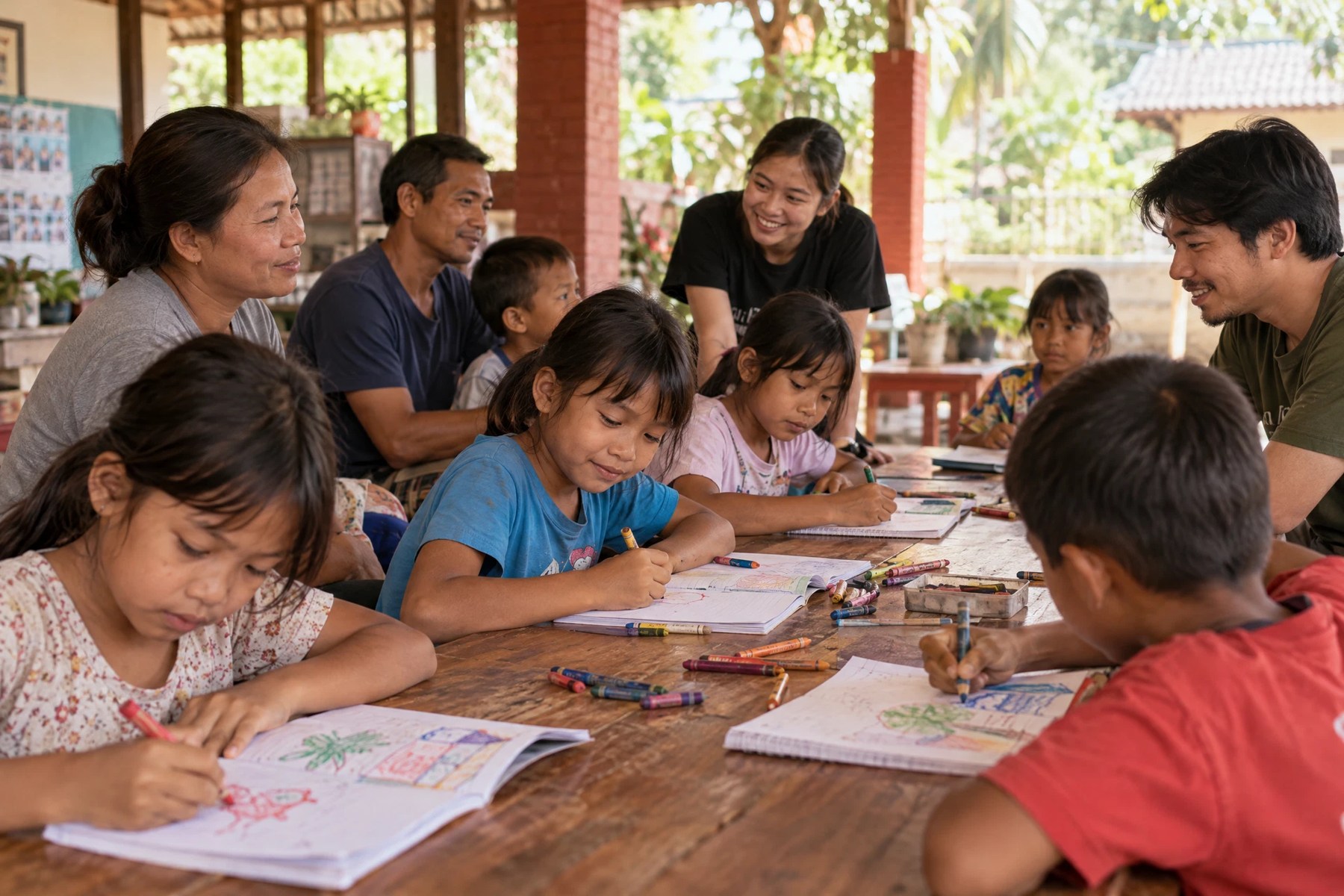
Why this work is needed
Saeng Tham Nam Chiwit Foundation’s proposed education work responds to barriers that can push children out of learning: household poverty, distance, disability-related access needs, insecure status, limited books, and weak support at key transitions. UNICEF Thailand reported on 23 January 2026 that only four in ten Grade 2 students had age-appropriate reading and mathematics skills, with rural and poorer children facing greater barriers. A joint UNICEF–UNHCR report also describes improved access for stateless people alongside policy and practitioner misunderstandings, socioeconomic barriers, uneven remote-school quality, secondary-school dropout, and Student Loan Fund ineligibility for some stateless youth.
These sources inform this draft; they are not endorsements or partnerships. Before support is offered, the proposed program will listen to children, caregivers, schools, and referral partners, then document consent and priority needs.
Our proposed mission
Our proposed mission is to help low-income school-age children remain meaningfully connected to safe, inclusive learning through practical education support, literacy opportunities, and respectful coordination with families and schools. We will put children’s dignity, informed participation, protection, and non-discrimination before publicity or fundraising convenience.
Proposed vision for 2031–2036
For 2031–2036, the proposed vision is that children facing economic, disability, migration, or statelessness-related barriers can participate in welcoming schools, find books and supportive adults, and continue learning without discrimination based on religion or nationality. This is an aspiration and planning direction, not a prediction or a claim of current impact.
Proposed 2027–2029 goals
These are proposed SMART targets, not results. In 2027, the program proposes to reach 60 children with consent-assessed support, distribute 180 learning kits, hold 24 reading sessions, and train 20 volunteers. In 2028, it proposes to reach 120 children cumulatively. In 2029, it proposes to reach 180 children cumulatively and to monitor a target of 85% school retention, using a documented baseline before interpreting progress.
Annual plans will assign a service area, eligibility pathway, budget ceiling, and owner to each target. Counts will be checked for duplication, and each child will be counted once in cumulative reach.
Who the proposed program serves
The proposed beneficiaries are low-income school-age children at risk of dropout. Priority consideration may include children with disabilities and children who are migrants or stateless, but no child will be excluded because of religion or nationality. Support will not be automatic: staff will assess needs, explain the program in an accessible way, seek age-appropriate child assent and caregiver consent where required, and accept referrals only when they are safe, relevant, and consented to.
Need and safety—not documentation status, publicity value, or donor preference—will guide decisions. When a child needs a service outside the program’s competence, the proposed team will seek a consented referral rather than promise help it cannot responsibly provide.
Stories from our principal
Education asks us to share responsibility. Listen before deciding, protect every child’s privacy, and measure whether support reaches each learner.
A foundation should explain its choices, learn from its work, and put children’s safety and dignity ahead of recognition.
Care without discrimination
Primary beneficiaries are children. Caregivers, educators and community volunteers are secondary participants: their knowledge and capacity help children benefit safely and continuously. Selection prioritises educational need, household circumstances and access barriers—not religion, citizenship or a donor’s preference.
A brighter future starts with us.
Give your time, share a resource, or help a child stay connected to learning.