
Education & community
Practical school support
A notebook, a school bag, a little breathing room. Proposed needs-based assistance for school-related costs and learning essentials.
Explore this programA practical proposed model for education support, reading and inclusive community learning—with clear responsibilities and honest measurement.
A notebook, a school bag, a little breathing room. Proposed needs-based assistance for school-related costs and learning essentials.
Explore this program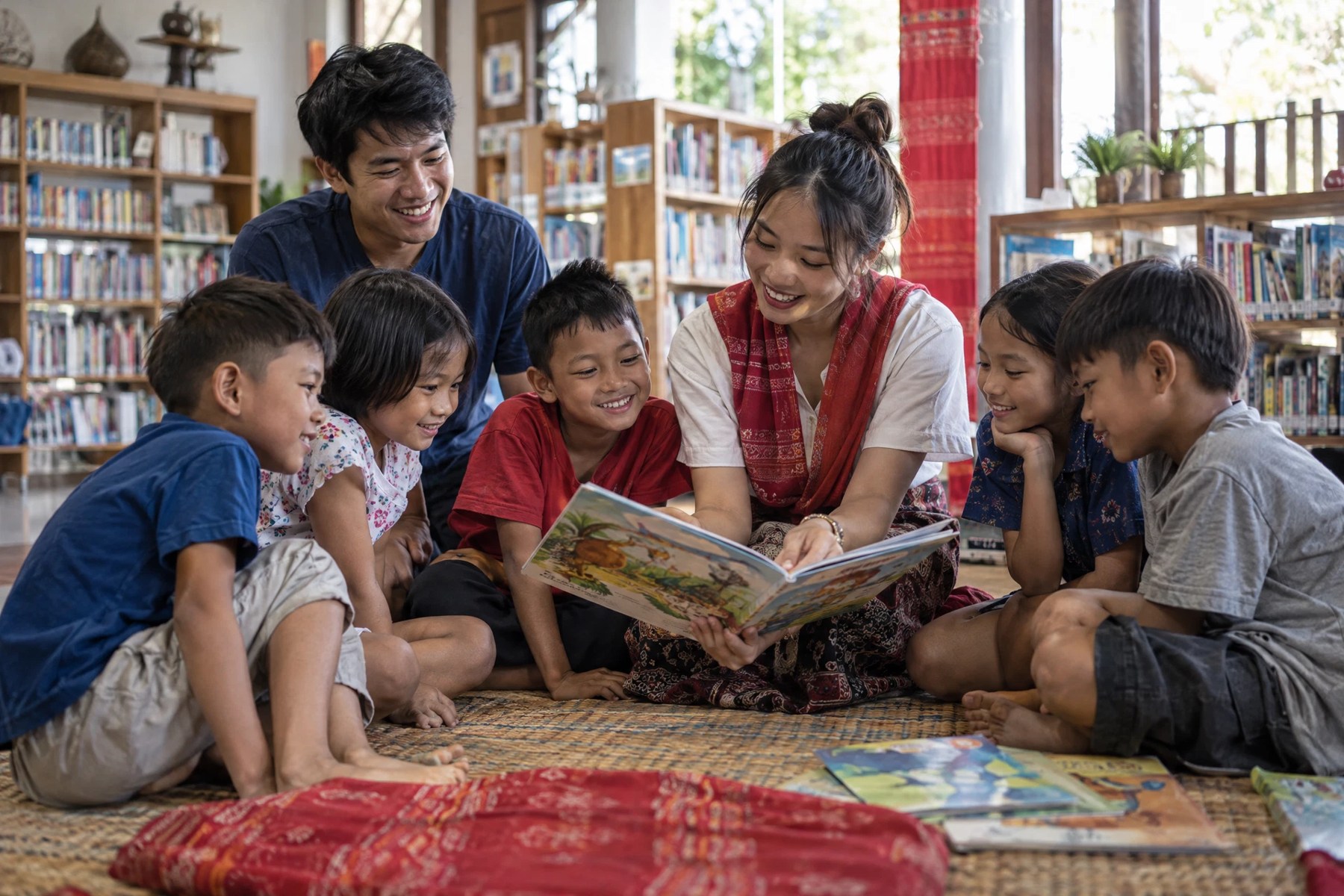
Stories open doors. Shared books and welcoming reading circles offer space to practise, ask questions and find a voice.
Explore this program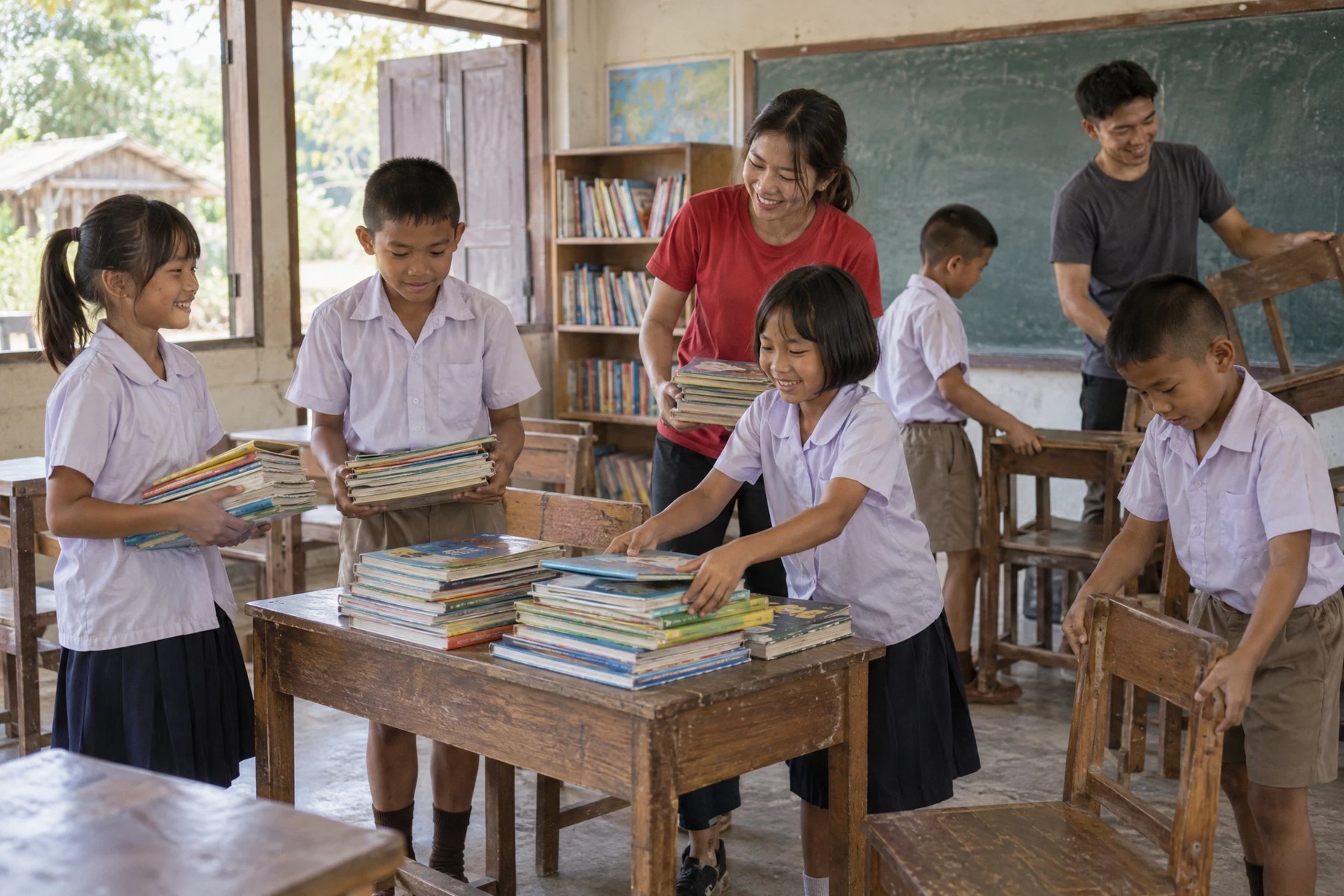
Safe, accessible learning spaces built with children, families and educators—not just for them.
Explore this programThe program draft connects resources to activities, activities to measurable outputs, and outputs to the outcomes children and families value. We will review evidence, listen and adapt rather than claim impact before it is demonstrated.
How you can contribute
First, the proposed program will address tuition-related school expenses through payments made directly to schools where appropriate, with written purpose and receipt controls. Second, it will strengthen literacy and learning environments through age-appropriate books, learning kits, reading sessions, and accessible materials. Support complements public education; it does not replace schools, caregivers, public entitlements, or specialist services.
If the program secures accountable inputs—restricted funds, books and kits, shared devices, trained people, school coordination, and safe records—it can carry out needs assessment, direct school support, reading sessions, volunteer coaching, and consented referrals. Expected outputs are documented assistance, kits distributed, sessions delivered, trained volunteers, and referrals completed. Short- and medium-term outcomes sought are improved participation, access to learning materials, reading practice, and continuity in school.
Over the longer term, the intended contribution is that more children remain engaged in learning and have stronger opportunities to progress. This framework does not guarantee change or claim causal attribution. It assumes schools are safe and welcoming, families can engage when contacted, resources arrive on time, and wider needs can be referred appropriately.
Each proposed activity will have a defined numerator, denominator, baseline, target, owner, and review date. For example, kit coverage is children receiving a complete kit divided by children assessed as eligible; reading-session delivery is sessions completed divided by sessions planned; and volunteer completion is volunteers completing required training divided by volunteers enrolled. The 85% retention target will use the number of participating children confirmed enrolled at the relevant school point divided by the baseline cohort with an agreed follow-up status.
The proposed team will review attendance and session logs monthly and use a termly reading assessment appropriate to children’s age and language. It will collect only information needed for service delivery and safeguarding, then publish anonymized aggregate progress in a quarterly public report. An annual review will compare plans, baselines, targets, costs, feedback, incidents, and lessons, recommending changes for the next cycle.
No individual child score, case story, photograph, or identifying detail will be published without a separate, informed, documented permission process—and personal child photographs are not part of the proposed routine communications approach.
The proposed operating team is one coordinator, one education lead, one part-time finance and administration role, one safeguarding focal person, and 20 volunteers. These are proposed roles, not claims that appointments have been made. Board oversight should approve policy, annual plans, material commitments, and restricted-fund use; no one person should initiate, approve, and reconcile the same payment or record.
Draft organization information for this website says the foundation was registered on 20 June 2024 with the Bangkok Foundation Registrar, number KT3412. This must be independently verified before publication. Governance records should show approvals, conflicts of interest, reconciliation, safeguarding review, and actions taken.
Proposed recruitment includes role-specific reference checks, a safeguarding code of conduct, orientation, and paired supervision before an individual works independently with children. Volunteers will join monthly reflection meetings and quarterly training on child safeguarding, inclusive communication, referral boundaries, and data handling. Approved, documented expense reimbursement may be available; reimbursement is not a wage and must never depend on a child’s participation or disclosure.
A proposed resource inventory will track shared books, laptops, offline learning materials, kits, and their condition, location, custodian, and return date. Access to secure records will be role-based and limited to what each person needs; files will be stored securely and reviewed for retention or deletion. The program will not use personal child photographs as routine evidence of delivery.
Over the next three to five years, the proposed plan is to build a reserve target equal to three months of essential costs, secure multi-year commitments where appropriate, and ensure that no single funder represents more than 35% of income. These are proposed safeguards, not present financial conditions. Local teacher capacity, reusable materials, transparent cost tracking, and carefully paced growth are intended to reduce dependence and preserve service quality.
A safeguarding concern will be reported immediately to the designated safeguarding lead and, where required for immediate safety or by law, to emergency authorities. The proposed team will use clear response records, survivor-centred practice, and need-to-know access. If funding is delayed, it will pause new commitments before reducing promised support. Data will be minimal, access-controlled, and reviewed. During flooding or severe weather, sessions may be postponed and transport plans adjusted. Cross-training will reduce disruption when staff or volunteers are unavailable.
School support: eligible children assisted ÷ eligible children assessed; payment receipts reconciled ÷ payments issued, reviewed monthly. Literacy: attendance at delivered sessions ÷ enrolled participants, plus term-to-term reading progress using a comparable age- and language-appropriate assessment. Learning environments: accessible sites with agreed safety checks completed ÷ sites planned, reviewed before each visit. Referral follow-up: consented referrals with a confirmed outcome ÷ consented referrals made, reviewed monthly. Unknown follow-up is reported separately, not silently removed to improve a rate.
The coordinator maintains coded enrolment and attendance registers. The education lead uses simple session checklists and termly reading rubrics. Finance maintains invoices, a restricted-fund ledger and monthly reconciliations. The safeguarding focal person maintains a restricted incident and referral log. Optional caregiver and child feedback is collected after sessions in accessible formats. The board reviews aggregate progress and finance quarterly and commissions an annual independent review when resources allow.
Proposed recruitment works through local educators, universities and community networks using written roles, fair selection and reference checks. Volunteers are matched to language and access needs, scheduled realistically and paired with a trained supervisor. Regular feedback, documented expense reimbursement where approved, recognition with consent and pathways to mentoring are intended to retain people without replacing paid responsibilities with unsupported volunteer labour.
Give your time, share a resource, or help a child stay connected to learning.