Bangkok inclusive learning space
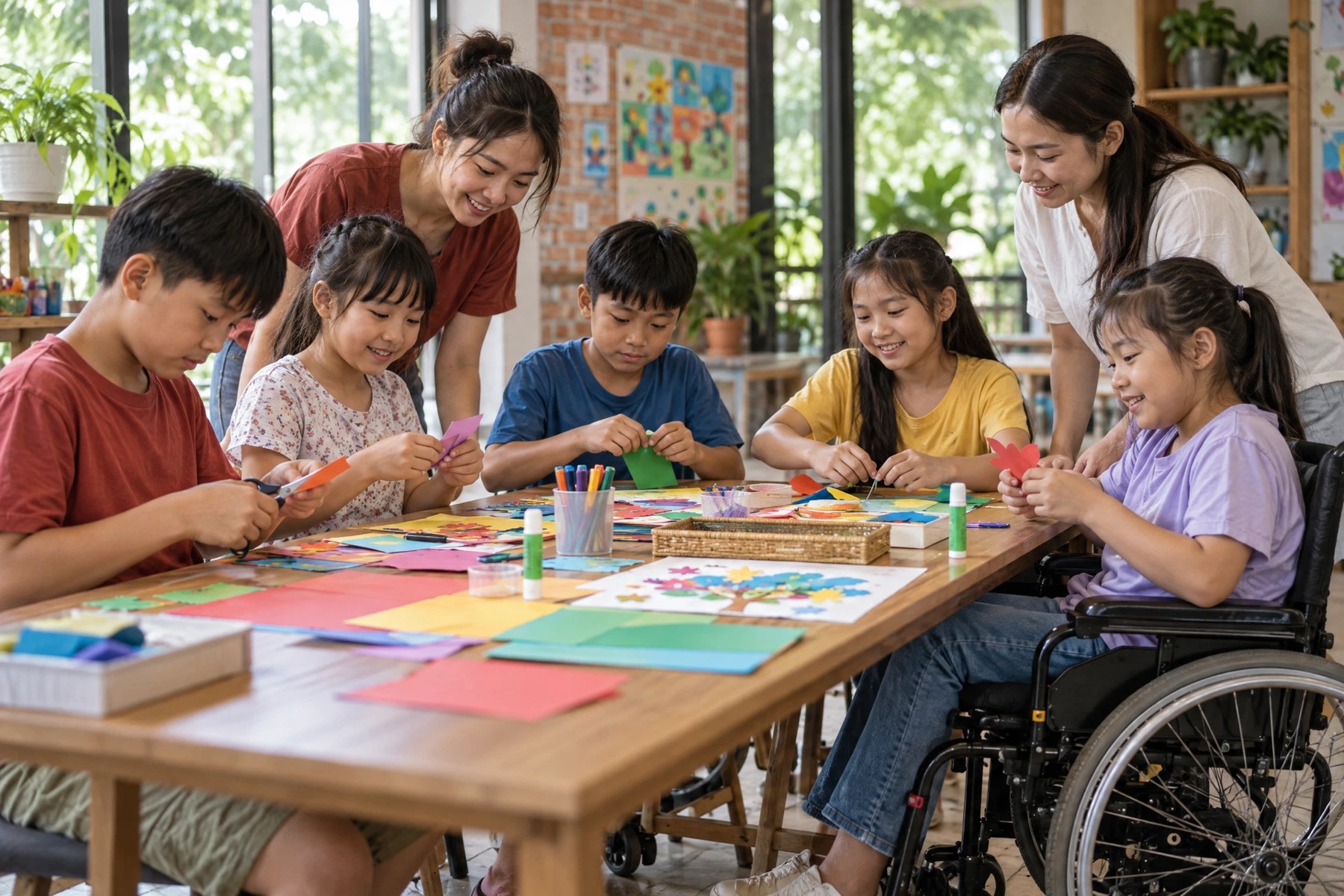
Picture an inclusive learning space in Bangkok where paper, textured materials, sound makers, and washable colours are arranged at different heights. A participant may draw, press, listen, direct a helper, or observe before joining.
The proposed scene treats art as a language with more than one doorway. Instead of asking everyone to make the same object, a facilitator could offer choices in tools, seating, communication, and time. A young person might point to a colour card, use a switch-adapted device, dictate an idea, or work beside a trusted guardian. Clear boundaries around touch, materials, and sharing are part of the invitation. No contribution needs to be explained or displayed to be valued.
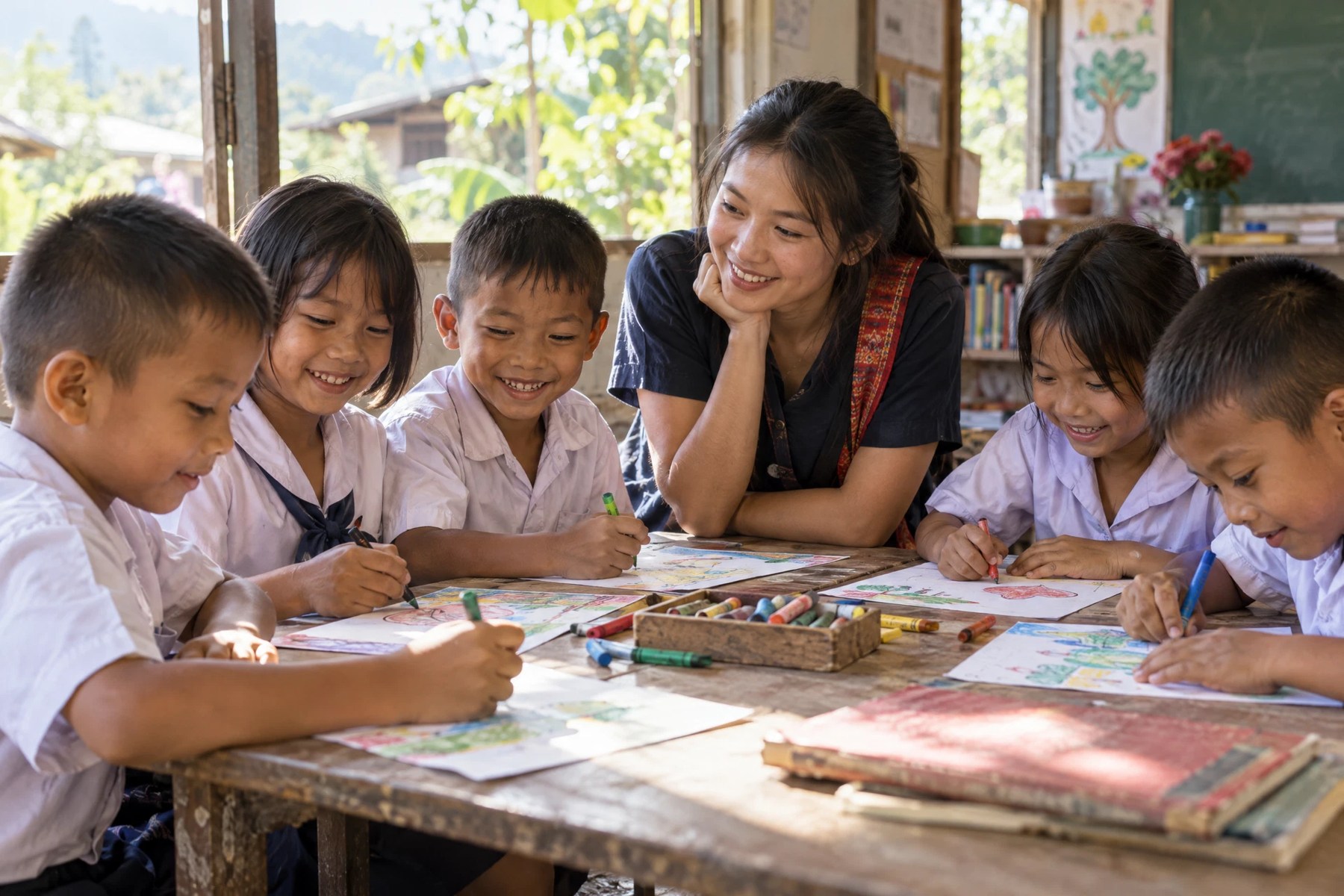
Accessibility is not an add-on after the tables are set. Before any session, organisers could ask participants and guardians about mobility, sensory, communication, and cultural considerations through an optional, privacy-respecting process. Volunteers would be briefed on safeguarding, inclusive language, and when to seek support from a designated lead. Consent should be renewed before photography, public display, or online sharing, with an equally welcome option to participate without being recorded.
A possible follow-up is a co-planning workshop with disability advocates, educators, artists, families, and young people. They could map the room, test materials, identify barriers, and write a simple access and safeguarding plan. Feedback could be offered verbally, visually, or privately after the session. The foundation may then review whether a small trial is feasible and what resources are required.
Back to all journey stories